

The total revenue from renting out market stalls has seen a slight decline in the third quarter, dropping by approximately 70 million soms compared to the second quarter of the year.
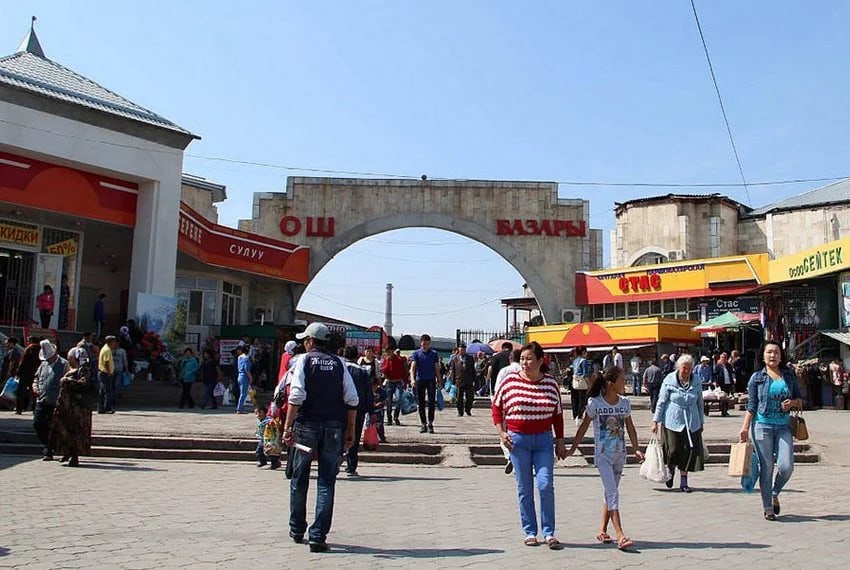
Regional revenue breakdown
The capital remains the primary driver of market income. Bishkek's 66 markets, which provide 30,700 trading spaces, collected 1 billion 975.3 million soms since the beginning of the year, with 656.76 million soms coming specifically from the third quarter.
Market rental revenue by region (since start of year)
National Statistical Committee
| Bishkek | 1,975.3 million soms |
|---|---|
| Chuy Region | 300.17 million soms |
| Jalal-Abad Region | 251.3 million soms |
| Osh Region | 230.3 million soms |
Other significant contributors include the Chuy Region, which collected 300.17 million soms through its 31 markets, and the Jalal-Abad Region, where 65 markets generated 251.3 million soms. The Osh Region, hosting 71 markets, brought in 230.3 million soms.
Market types and rental rates
The country's market infrastructure consists of various specialized types. Out of the total markets, 178 are mixed-use, 64 are dedicated to clothing, 28 focus on livestock and poultry, 35 are food markets, and 11 are automotive markets.
Market capacity and pricing
The average daily rental rate for a single spot across the republic rose slightly to 208 soms, up from 204 soms three months prior. Rates vary significantly by location: Bishkek has the highest daily rate at 335 soms, while Issyk-Kul offers the lowest at 73 soms.
Context
The National Statistical Committee monitors the economic activity of the 316 markets and 93 shopping centers operating across Kyrgyzstan.