

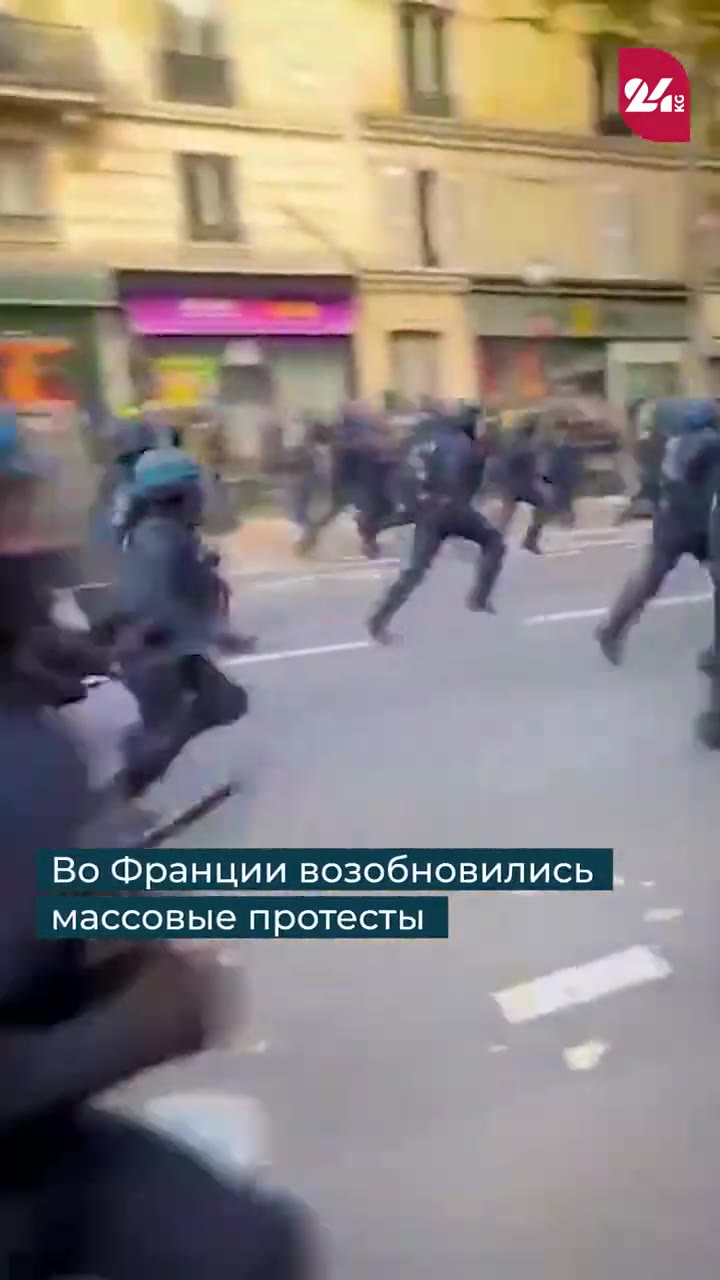

Mass protests have resumed in the country, during which law enforcement used tear gas. The action, dubbed "Black Thursday" by the media, brought residents of French cities together for a nationwide demonstration at the call of the largest trade unions.
Scale and consequences of the actions
As a result of the protests, clashes with police occurred in Lyon and Paris, where law enforcement used batons and tear gas. The authorities faced problems related to education and the rising cost of living.
According to the latest data from the French Interior Ministry, about 270,000 demonstrators took to the streets of cities other than the capital. About 70,000 security personnel were deployed to maintain public order. The authorities had initially expected up to 700,000 protesters, including up to 80,000 in Paris.
Participants and causes of discontent
Trade unions, activists, as well as schoolchildren and students are taking part in the demonstrations in Paris, Lyon, Bordeaux and other cities. The protests stemmed from discontent with the education system and the rising cost of living. The authorities fear a repeat of the aggression seen earlier, when demonstrators in the country smashed shop windows, burned cars and looted stores.
Problems facing the authorities
The French authorities, according to reports, are unable to resolve the problem posed by the outbreak of schoolchildren's protests amid discontent with the education system. This has led to a third of universities suspending their operations, and the Eiffel Tower being closed to visitors.